Daddy Santa: A Friendly Script Font
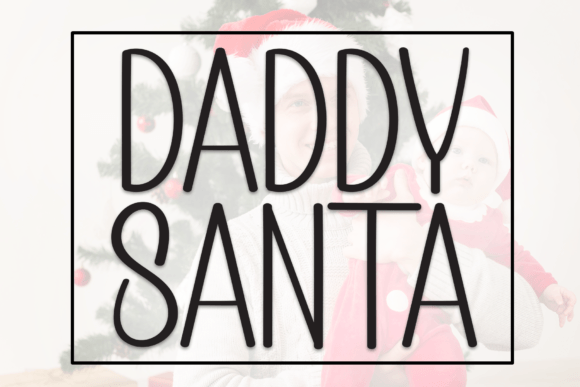
There I was, staring at a blank brand board, trying to find the right tone for a small boutique café looking to refresh its visual identity. The owner wanted something approachable, a bit playful, but still professional enough to feel trustworthy. That’s when I pulled out Daddy Santa, a casual handwritten font that feels like it was scribbled on a napkin during a coffee break.
What Makes Daddy Santa Unique
Daddy Santa has a natural, flowing stroke that gives it a relaxed and friendly vibe. It doesn’t feel too polished or too rough—it’s just right. The letters have a slightly uneven baseline, which adds to its organic feel. It’s not the kind of font you’d use for a corporate annual report, but for a cozy café or a handmade shop, it fits perfectly.
The personality of Daddy Santa is warm and inviting. It carries a sense of familiarity, like an old friend who always knows the right thing to say. This makes it ideal for branding that wants to communicate a personal touch without being too informal.
Testing Daddy Santa in Real Projects
I first tried it on a logo concept for the café. The name was simple—just the café’s name in all caps. It looked great, with a softness that made the brand feel more accessible. When paired with a clean sans serif for the tagline, it created a nice contrast without clashing.
On a packaging mockup, Daddy Santa added a handcrafted feel. The font worked well on product labels and promotional banners, giving them a homemade quality that stood out from the usual mass-produced designs. It also held up well on social media graphics, where a little personality goes a long way.
When I used it on a business card, the font’s fluidity made the text feel more engaging. It wasn’t overly decorative, but it had enough character to make the card memorable. On a website header, it brought a sense of warmth that balanced out the more rigid elements of the design.
Best Uses for Daddy Santa
Daddy Santa excels as a display or headline font. It’s perfect for short phrases, logos, and titles where a bit of flair is needed. Its handwritten style makes it ideal for creative projects that want to feel authentic and personal.
It works well in editorial design, especially for magazine covers, posters, or flyers that aim to grab attention. It also pairs nicely with other fonts—try pairing it with a serif or sans serif to create balance. For example, using it for a headline and a modern sans serif for body text can give your design both personality and readability.
However, it’s not the best choice for long paragraphs or small text sizes. The strokes can get a bit messy when scaled down, making it harder to read. If you’re designing something that needs high legibility, like a menu or a brochure, you might want to stick with a more structured typeface.
Where Daddy Santa Falls Short
While Daddy Santa is great for creative projects, it may not be the best fit for formal or corporate branding. Its casual nature could undermine the professionalism required for certain industries. If you’re working on a legal firm or a financial services brand, this font might not be the right choice.
Also, keep in mind that the font’s style might not translate well to all languages. If your project involves multilingual content, check the font’s support before finalizing your design. Some characters might not look as good or might be missing entirely.
Practical Tips for Using Daddy Santa
If you’re considering using Daddy Santa in a project, test it in different contexts. Try it on a shop sign, a product label, or a printed card to see how it performs in real-world scenarios. Pay attention to how it looks at various sizes and in different lighting conditions.
Before using it in client work, make sure you understand the licensing terms. Commercial use often requires a separate license, so double-check the font’s availability and restrictions. This is especially important if you’re creating templates, merchandise, or digital products that will be sold or distributed.
Lastly, don’t be afraid to experiment. Handwritten fonts like Daddy Santa offer a lot of flexibility, and sometimes the best results come from unexpected pairings. Whether you’re working on a logo, a social media post, or a packaging design, there’s likely a way to make it work.