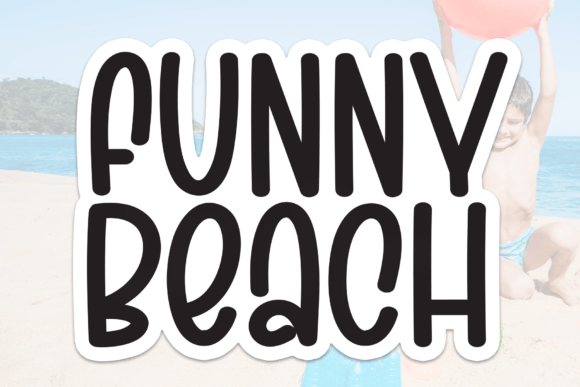
Funny Beach Font Review
There I was, staring at a blank brand board, trying to figure out how to bring a new boutique café’s identity to life. The client wanted something warm, approachable, and a little whimsical—something that felt like a hug from a friend. That’s when I reached for Funny Beach, a sweet and friendly handwritten font that promised to deliver exactly that vibe.
What Makes Funny Beach Unique
Funny Beach is a script handwritten font with a casual, natural feel. It doesn’t look overly polished or rigid; instead, it feels like it was written by hand, with subtle variations in stroke weight and spacing that give it character. The font has a playful personality, making it perfect for brands that want to convey warmth, creativity, or a sense of fun without being too flashy.
Its style is versatile enough to work in a variety of design contexts, but it really shines when used as a display or headline font. The fluidity of the letters makes it ideal for logos, social media graphics, and packaging mockups where a human touch is desired.
Testing Funny Beach in Real Projects
I first tested Funny Beach on a logo concept for the café. The font added a softness that balanced the more structured elements of the design. When paired with a simple sans serif for the tagline, it created a nice contrast that felt modern yet personal.
On a packaging mockup, Funny Beach looked great on product labels and coffee bags. Its handwritten quality gave the brand a handmade, artisanal feel that resonated with the target audience. It also worked well on business cards, where its charm stood out without overwhelming the design.
For a website header, Funny Beach brought a sense of energy and approachability. It wasn’t too distracting, and it complemented the clean lines of the rest of the layout. On social media, it caught the eye in post titles and captions, adding a friendly tone that encouraged engagement.
Strengths and Limitations
Funny Beach excels in short-form applications where visual appeal and personality are key. It’s not designed for long body text or small sizes, where the irregularities in the letterforms could affect readability. For that reason, it’s best suited as a display or accent font rather than a primary typeface.
It’s also important to consider the context of use. While it works well for creative, lifestyle, or niche brands, it may not be the best choice for formal or corporate projects where a more traditional font would be expected.
Pairing and Practical Tips
When pairing Funny Beach with other fonts, it’s best to go with something that complements its organic feel. A clean serif or sans serif can create a nice balance, offering structure while letting the handwritten font shine. For a more modern look, pairing it with a geometric sans serif can add contrast and sophistication.
Before using Funny Beach in client work, it’s always a good idea to test it in different sizes and formats. Print it out, view it on screens, and see how it looks in various applications. This helps ensure it meets the project’s needs and maintains its intended personality.
Another practical tip is to check the font’s licensing. Make sure it’s suitable for commercial use, especially if you’re planning to apply it to branding, packaging, or digital assets for clients. Some fonts have restrictions that might limit their use in certain contexts.
When to Use Funny Beach
Funny Beach is a great choice for projects that benefit from a personal, expressive touch. It works well for logos, social media headers, packaging, and any design that wants to feel authentic and relatable. It’s also a solid option for seasonal campaigns, limited edition products, or anything that needs a bit of flair.
That said, it’s not a one-size-fits-all solution. If your design requires clarity, precision, or a more professional tone, you might want to look for a different font. But for the right project, Funny Beach can add a unique and memorable element that sets your design apart.
As someone who’s used it in multiple branding scenarios, I can confidently say that Funny Beach is a valuable addition to any designer’s toolkit. Its friendly, natural style makes it incredibly versatile, and it’s always a pleasure to see how it transforms a design from ordinary to something truly special.